
Open source · MIT · zero dependencies
See your AI's memory come alive.
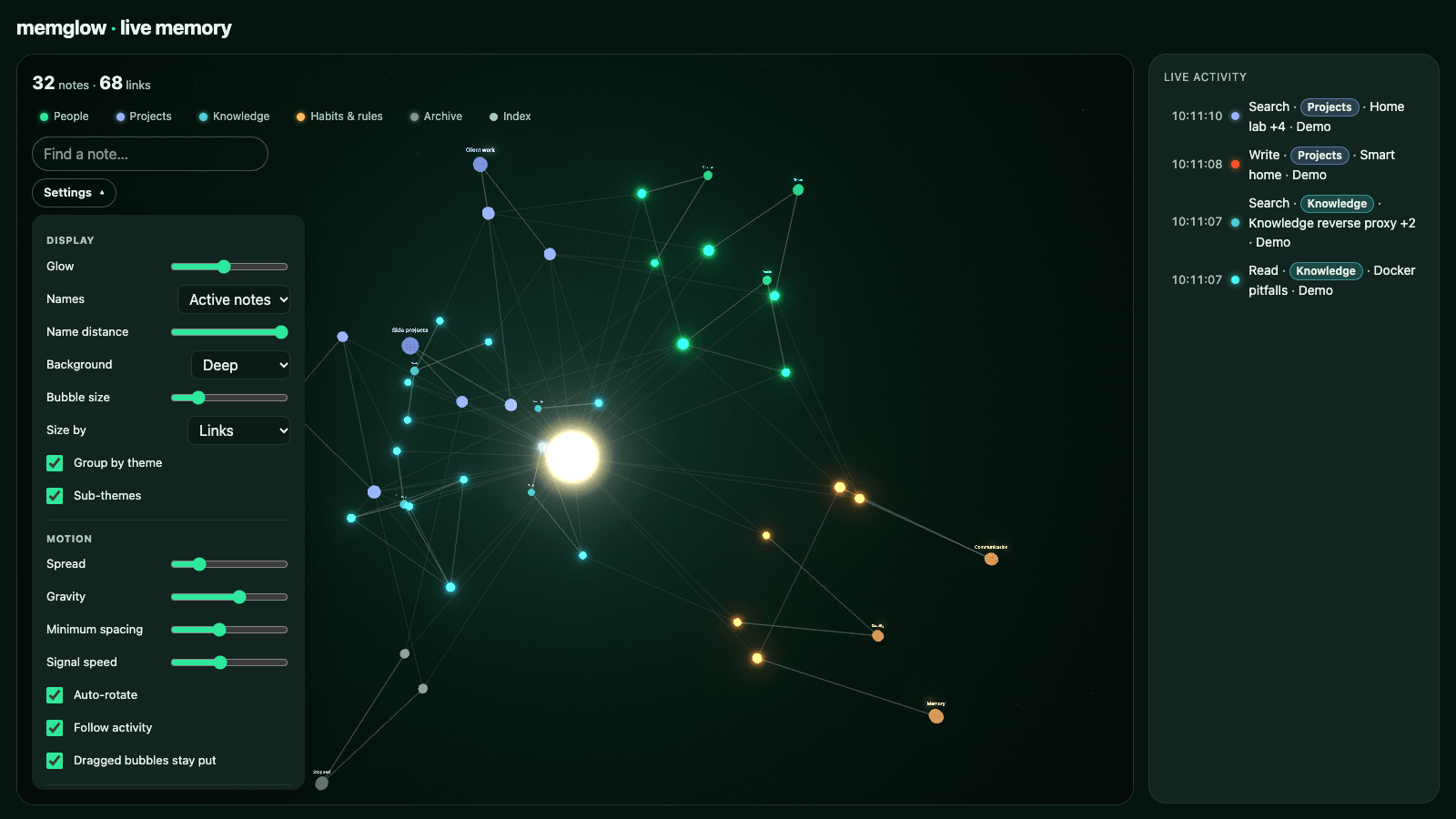
memglow turns the Markdown memory of your AI tools — a basic-memory knowledge base, an Obsidian vault, any folder of notes — into a live 3D brain. When your assistant reads, searches or writes a note, the neuron lights up and a comet runs along its links.
- Claude Code · Codex · Gemini CLI · Cursor · Copilot · more
- basic-memory
- Obsidian
- Node 18+ · no build step
- Docker
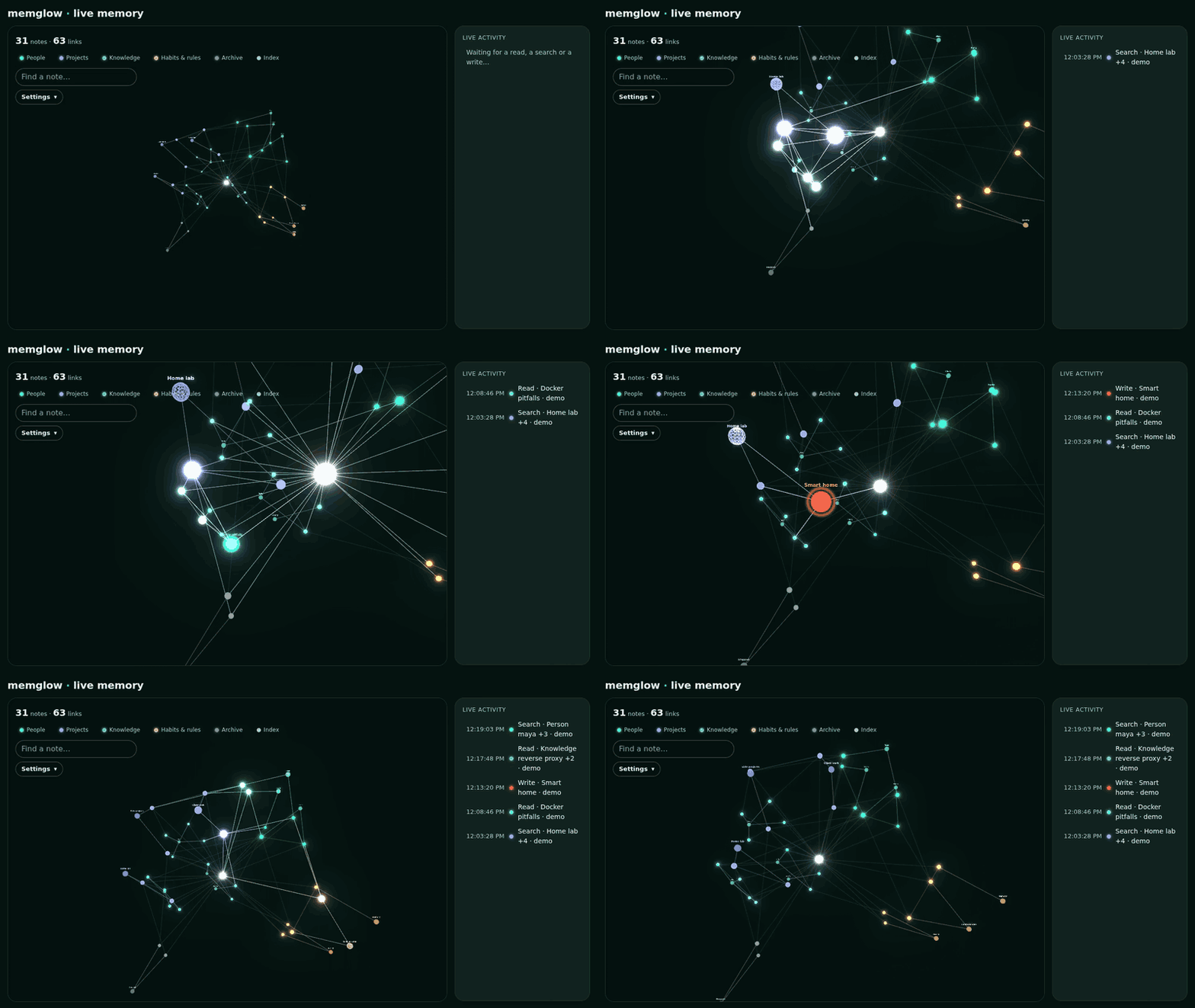
Your assistant's memory, at a glance
Calm at rest, alive when something happens. Built for people who let an AI remember things for them — and want to see what it does with it.
Live assistant activity
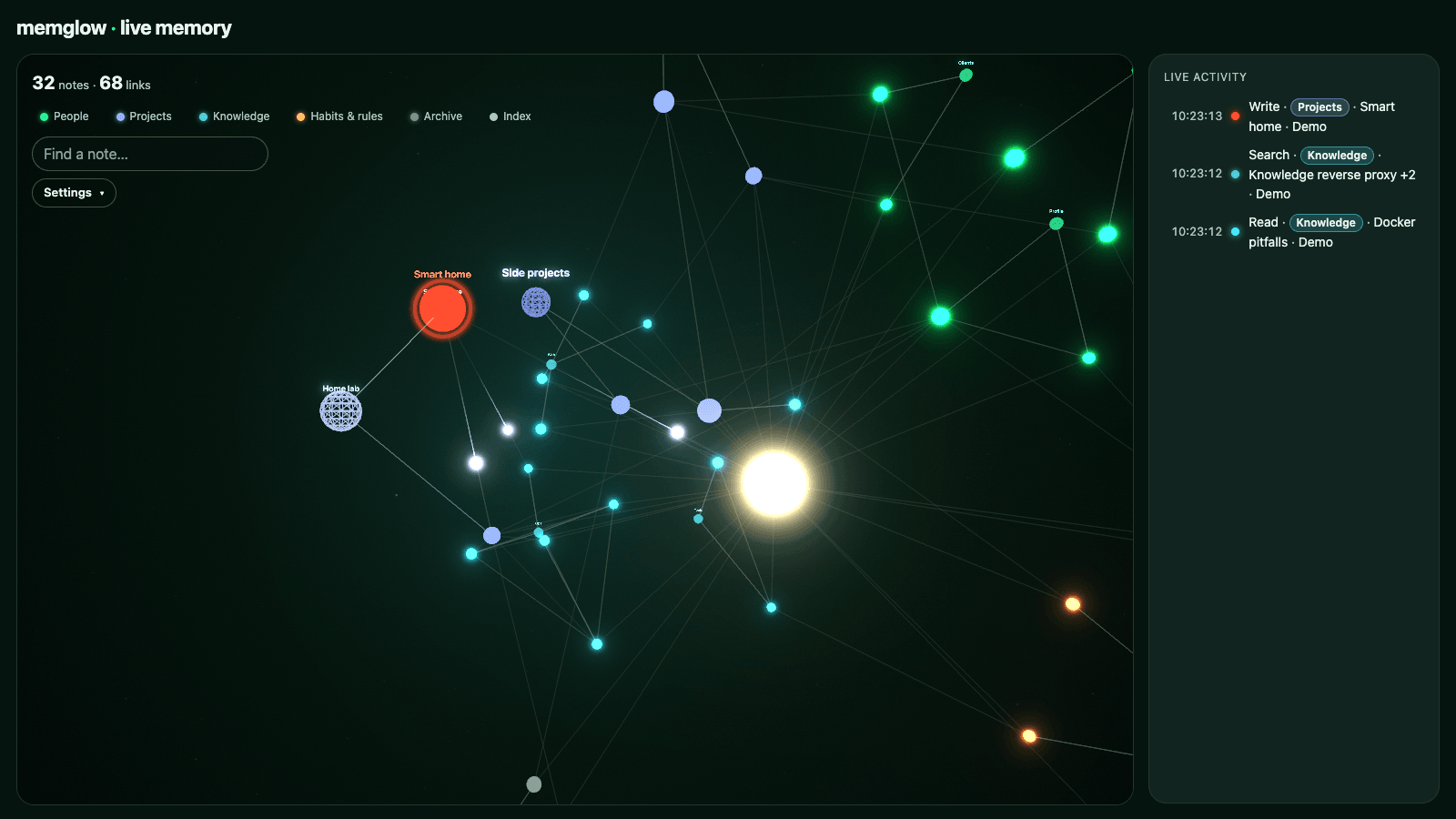
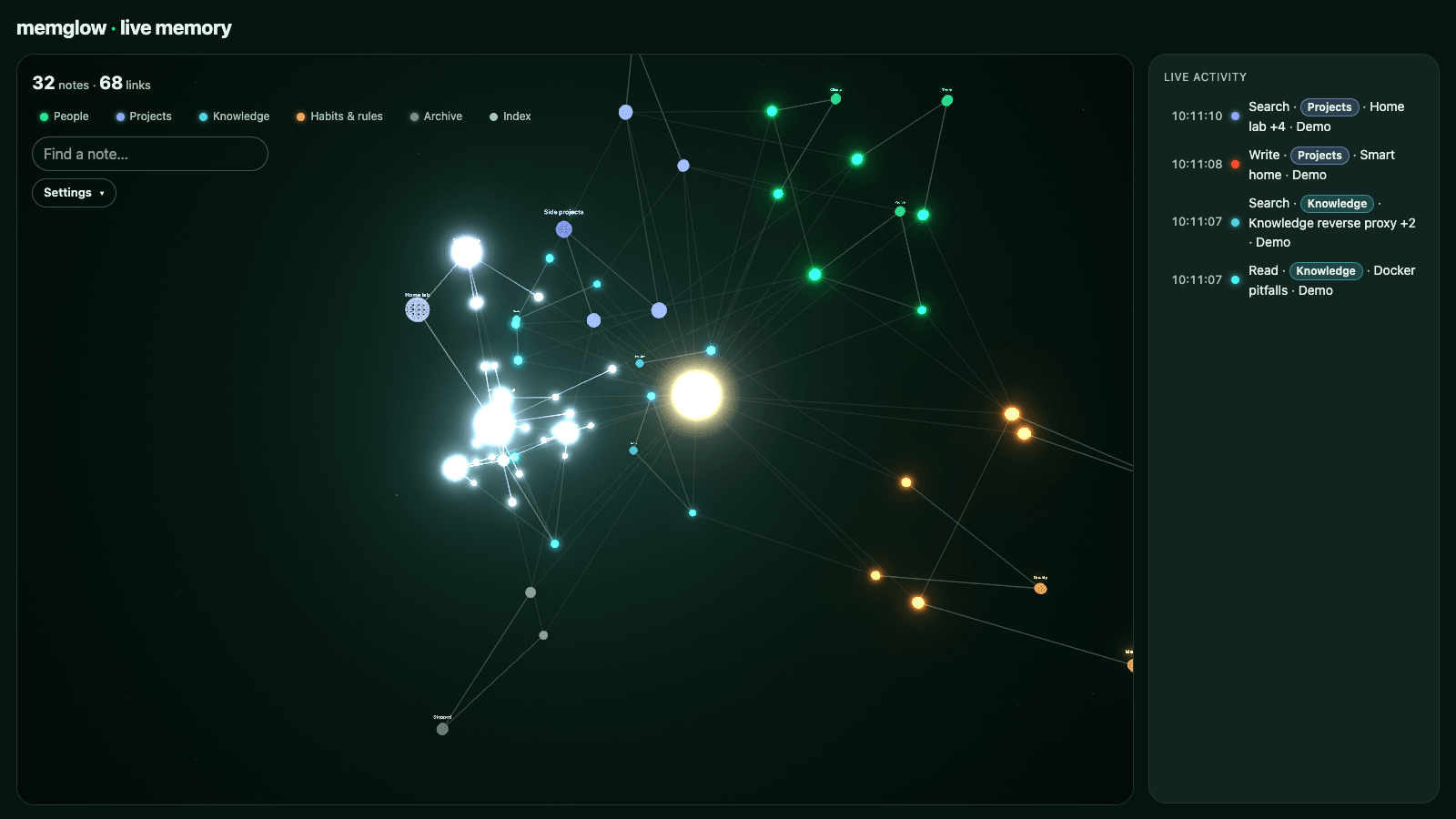
Hooks for your AI tools — or an MCP proxy — report every read, search and write of a note. The note flashes in the colour of the action; comets run to its neighbours.
Camera that follows
The camera glides to what the assistant touches, frames a search's results, then drifts back to the overview after a few quiet seconds.
Themes & sub-themes
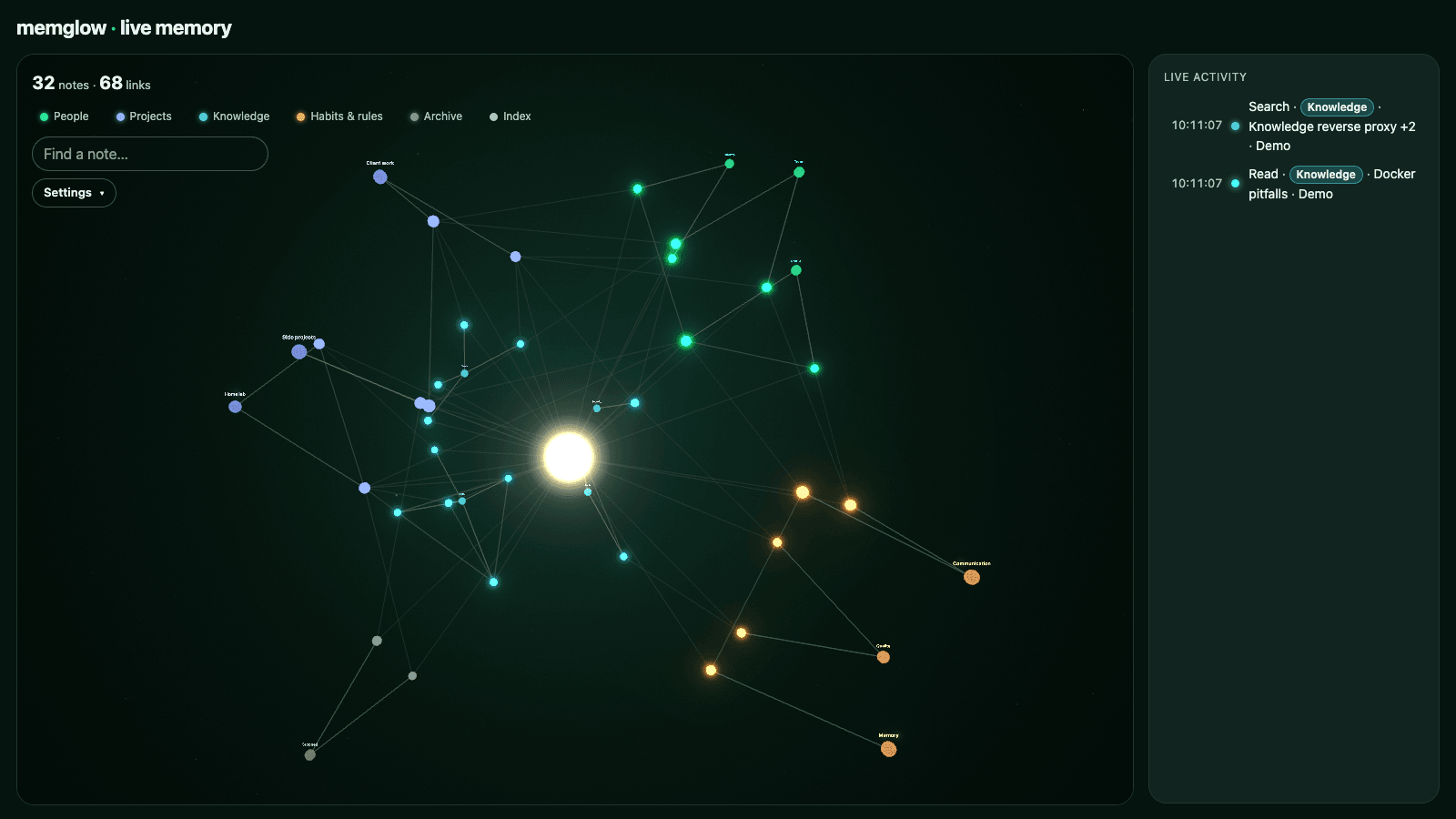
Notes cluster by theme, with relay bubbles for sub-themes. Straight from frontmatter or folder names.
Private by design
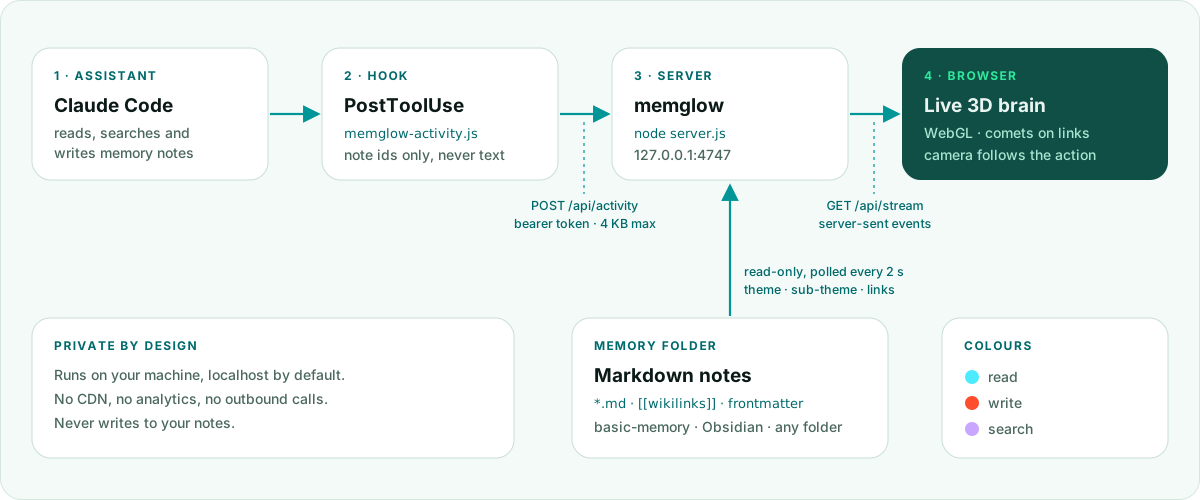
Runs on localhost, reads your notes read-only, masks secret-looking lines. No CDN, no analytics, no outbound calls. Zero dependencies: Node 18+, or one Docker container.
Memory cost
See roughly how many tokens your assistant spends reading its memory, which notes cost the most, which are too large or never read — and copy a ready-made prompt to have your AI split a large note.
Tune it live
Background, glow, bubble size (by links or token cost), names, spread, gravity, spacing, signal speed, links at rest, auto-rotate. Find a note and fly to it. Everything stays in your browser.
Works with your AI tools
Each native hook was checked against its vendor's documentation. Tools without hooks go through the MCP proxy, and every write is picked up from the notes folder anyway. Only note names are sent, never content.
Screenshots
Real captures of the fictional demo memory that ships with the repository.
How it works
memglow watches a folder of Markdown notes and listens to a hook. Nothing else.
Quick start
Node 18 or newer. The installer finds your notes and your AI tools, backs up every file it changes, and memglow uninstall undoes it.
npx memglow init
npx memglow
# then restart your AI tools
open http://127.0.0.1:4747
Just the demo: git clone the repository and run MEMORY_DIR=./demo/memory node server.js. Options, Docker and hooks by hand: see the README.
Coming soon
memglow Pro
For people who live in their assistant's memory every day. The open-source edition stays free.
- Dashboard — words, notes, links and activity over time, memory health.
- History & diffs — click a write to see exactly which lines changed.
- Several memories and users — per-person, theme-level access.
- Two-factor login for a viewer exposed to the internet.
Would you use it?
Tell us which feature matters most to you in GitHub Discussions. No payment, no newsletter, no e-mail.